
Sukanya Samriddhi Yojana 2026: Open Account, Deposit Limits & Maturity Rules
Sukanya Samriddhi Account is a government small-savings scheme for the girl child. It offers one of the highest small-savings interest rates, tax benefits under Section 80C and tax-free maturity.
Rules follow the Sukanya Samriddhi Account Scheme as published by India Post and the National Savings Institute. The interest rate is revised every quarter by the Ministry of Finance — check the current rate at your post office or bank.
Answer 5–7 simple questions and get your eligibility score in 2 minutes.
Check eligibility now →At a glance
- Age of girl
- Below 10 years at opening
- Deposit
- ₹250 to ₹1.5 lakh per financial year
- Deposit period
- 15 years from opening
- Maturity
- 21 years from opening
What is it?
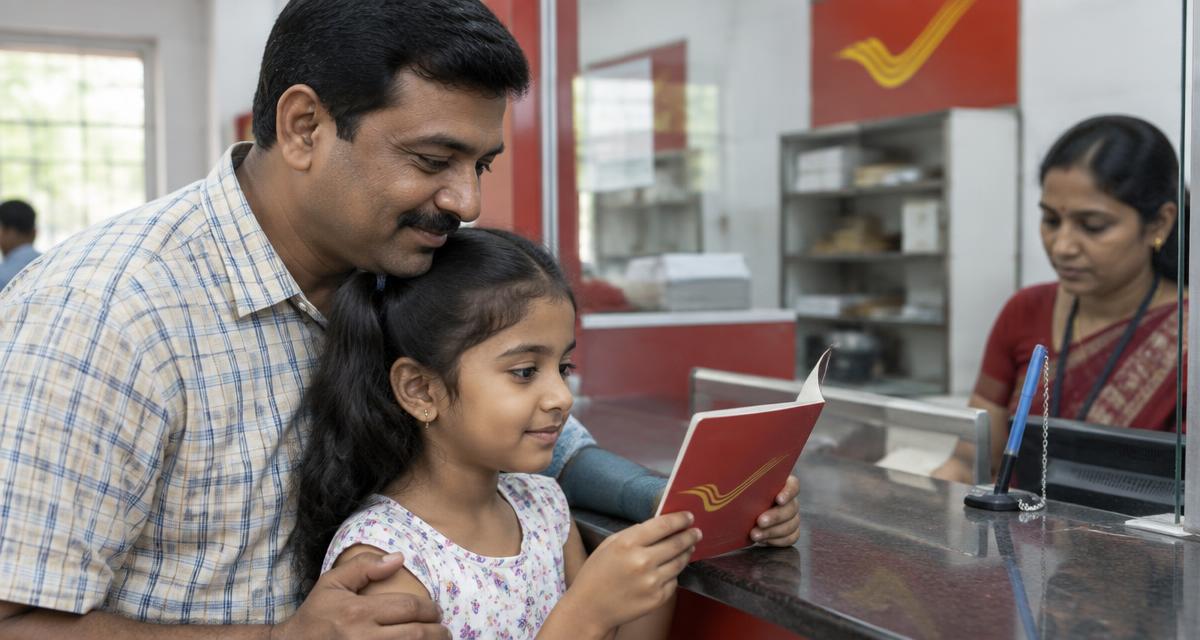
The scheme was launched in 2015 under Beti Bachao Beti Padhao. A parent or legal guardian opens the account in the girl's name at any post office or authorised bank. Interest is compounded yearly and credited at the end of each financial year.
Benefits
Deposits qualify for deduction under Section 80C (old tax regime), and both interest and maturity amount are tax-free. The rate is set by the government, so the money is fully backed by the Government of India.
Eligibility criteria
- ✓Girl child who is an Indian resident and below 10 years of age
- ✓Account opened by parent or legal guardian
- ✓Maximum two accounts per family; a third is allowed only for twins/triplets in the second birth
- ✓Only one account per girl
Documents required
- ✓Birth certificate of the girl child
- ✓Aadhaar and PAN of the parent/guardian
- ✓Address proof of the parent/guardian
- ✓Passport-size photographs and initial deposit (minimum ₹250)
How to apply — step by step
- Visit any post office or authorised bank (SBI, PNB, BoB and others)
- Ask for the Sukanya Samriddhi account opening form
- Submit the form with the girl's birth certificate and your KYC documents
- Make the first deposit of at least ₹250 by cash, cheque or online transfer
- Collect the passbook; later deposits can be made via IPPB or net banking
Important dates
The account must be opened before the girl turns 10. Deposit at least ₹250 every financial year (by 31 March) to avoid a ₹50 penalty per year of default.
Common mistakes to avoid
- ✓Missing the minimum yearly deposit and letting the account become 'default'
- ✓Thinking deposits continue for 21 years — they are needed only for 15 years
- ✓Opening a third account without a twins/triplets certificate
- ✓Assuming you can withdraw any time — partial withdrawal is allowed only after 18 for education or marriage
Frequently asked questions
What is the current SSY interest rate?
It is notified every quarter by the Ministry of Finance. Check the latest rate at your post office or on the National Savings Institute website.
Can the account be closed early?
Yes, for the girl's marriage after she turns 18, or on compassionate grounds such as serious illness or the account holder's death.
Can NRIs open an SSY account?
No. The girl must be an Indian resident when the account is opened.
Can I shift the account from post office to bank?
Yes, the account can be transferred anywhere in India between post offices and authorised banks.
Answer 5–7 simple questions and get your eligibility score in 2 minutes.
Check eligibility now →