
Marriage Certificate Online Apply 2026: Documents, Witnesses, Fees & Step-by-Step Process
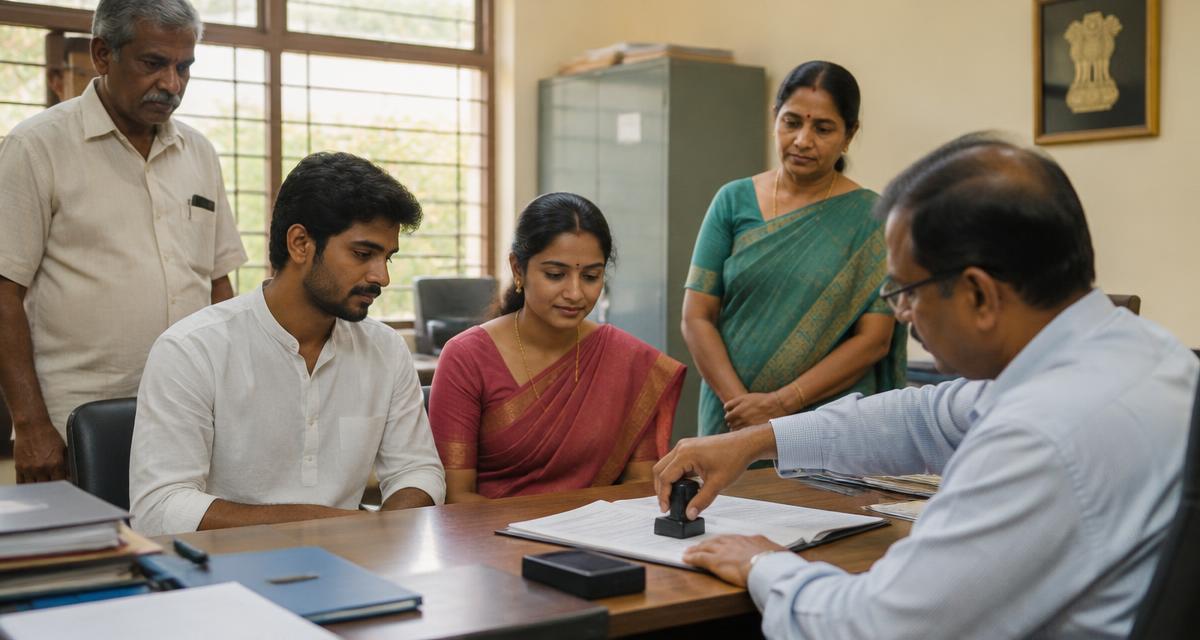
A marriage certificate is the official proof that your marriage is registered with the government. You need it for a passport in the spouse's name, a spouse visa, bank and insurance nominee claims, changing the wife's surname in documents, and many state schemes for married women. In 2006 the Supreme Court (Seema v. Ashwani Kumar) directed that marriages of all citizens should be registered, and most states have made rules for it. Today most states let you fill the form online on their registration or e-district portal, book a date, and then visit the registrar once with your witnesses for verification and signature.
Age limits and the Special Marriage Act's 30-day notice follow the central Acts as checked on 30 Oct 2026. Fees, the number of witnesses, the documents list and whether one or both visits are needed are set by each state's rules, so read the instructions on your state portal before applying.
At a glance
- Minimum age
- Groom 21 years, bride 18 years
- Main laws
- Hindu Marriage Act 1955 (Sec. 8) or Special Marriage Act 1954
- Special Marriage Act
- 30-day public notice before registration
- Where
- State registration / e-district portal + registrar office visit
What is it?
There are two common routes. If both partners are Hindu, Buddhist, Jain or Sikh and the marriage has already taken place with customary rites, it is registered under Section 8 of the Hindu Marriage Act, 1955. This is quick because the wedding has already happened; you simply record it. The Special Marriage Act, 1954 is for any two Indians regardless of religion, including inter-faith couples. Under this Act you first give a notice of intended marriage to the Marriage Officer of the district where at least one partner has lived for the last 30 days. The notice is displayed for 30 days so that objections, if any, can be raised. After that the marriage is solemnised and registered before the officer with three witnesses. Muslim, Christian and Parsi marriages can be registered under the state's compulsory registration rules or the Special Marriage Act, depending on the state.
Benefits
A registered marriage gives clear legal proof of the relationship. It is accepted for a passport with the spouse's name, spouse and dependant visas, opening joint bank accounts, claiming insurance or pension as a nominee, inheritance matters, and updating the surname in Aadhaar and other records. Many state schemes for brides, widows or married women — and court matters such as maintenance — also ask for this certificate. Having it early saves trouble later.
Who is affected
- ✓Groom must be at least 21 and bride at least 18 years old on the date of marriage
- ✓Neither partner should have a living spouse at the time of marriage
- ✓Both partners must be of sound mind and able to give valid consent
- ✓Partners should not be within prohibited degrees of relationship unless custom allows (Hindu Marriage Act)
- ✓Apply in the district where the marriage took place or where either partner lives, as per your state's rules
What to check
- ✓Application form filled on the state portal, signed by both partners
- ✓Age proof of both — birth certificate, Class 10 marksheet or passport
- ✓Address and identity proof of both, such as Aadhaar or voter ID
- ✓Passport-size photos of both and a wedding photograph
- ✓Wedding invitation card or priest/religious-place certificate where available
- ✓Witnesses with their identity proof (usually two under state rules for HMA; three under SMA)
- ✓Divorce decree or spouse's death certificate if either partner was married before
What to do next
- Open your state's marriage registration or e-district portal and create a login
- Choose the right Act — Hindu Marriage Act for an already-performed Hindu wedding, or Special Marriage Act
- Fill details of both partners and witnesses exactly as in their ID proofs
- Upload documents and photos, pay the fee shown and book an appointment
- Visit the registrar or marriage officer on the date with both partners, witnesses and original documents
- Sign the register after verification; under SMA this happens after the 30-day notice period
- Collect or download the marriage certificate and check every spelling
Important dates
Under the Hindu Marriage Act you can usually register even years after the wedding, though some states charge a late fee after a set period. Under the Special Marriage Act, the 30-day notice is fixed by law, and the marriage must be solemnised within three months of the notice, otherwise a fresh notice is needed.
Common mistakes to avoid
- ✓Names spelt differently in Aadhaar, marksheet and the application
- ✓Choosing the Hindu Marriage Act for an inter-faith couple, which leads to rejection
- ✓Bringing witnesses without original ID proof
- ✓Paying agents more than the fee listed on the official portal
- ✓Not bringing a divorce decree or death certificate when a partner was married before
Frequently asked questions
Is marriage registration compulsory?
The Supreme Court directed in 2006 that all marriages be registered, and many states have compulsory registration rules. Even where penalties are rare, the certificate is needed for passports, visas and claims.
Can we apply fully online?
Most states take the form, documents and fee online, but you still need one visit to the registrar for verification and signatures.
How many witnesses are needed?
Three under the Special Marriage Act. Under the Hindu Marriage Act the number is set by state rules — often two.
Can we register a marriage that happened years ago?
Yes, under the Hindu Marriage Act it can usually be registered later, sometimes with a late fee as per state rules.